

What Is Flexographic Printing? The Complete 2026 Guide
- Written by: Dauxin Team
- Last Updated: December 14, 2025
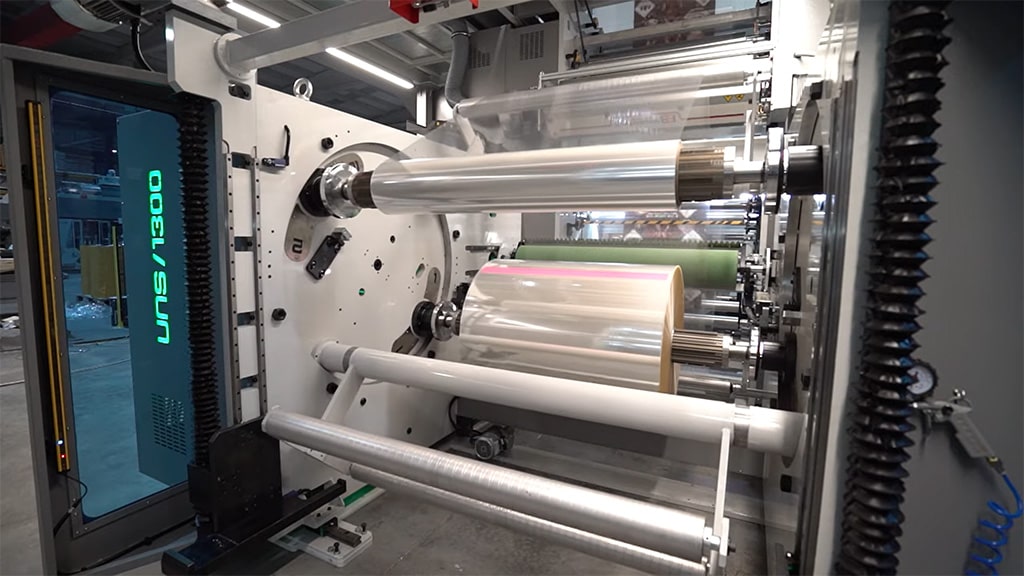
Table of Contents
Flexographic printing (often called "flexo") is a high-speed manufacturing process that uses flexible photopolymer plates, adhering to standards set by the Flexographic Technical Association (FTA), to transfer ink onto a substrate.
Think of it as a sophisticated, industrial-scale rubber stamp. It is the global standard for printing packaging materials—including corrugated boxes, plastic labels, and flexible food pouches—due to its ability to print on non-porous surfaces at incredibly high speeds (up to 2,000 feet per minute).
In this 2026 guide, we cover exactly how flexo works, the rise of hybrid presses, and how to decide between flexo and digital printing for your next project.
How the Flexographic Process Works (Step-by-Step)
Unlike digital printing, which sprays ink like a home printer, flexo is a mechanical process. Here is the standard workflow for a modern flexo press:
Plate Making: The design is exposed onto a flexible photopolymer plate using laser imaging. This creates a raised 3D relief of the image (similar to a stamp).
Plate Mounting: The plate is wrapped around a plate cylinder using adhesive tape. In 2026, many presses use automated mounting systems to ensure perfect alignment (registration).
Inking (The Anilox Roller): This is the heart of flexo. A ceramic roller engraved with millions of microscopic cells, called an Anilox Roller, picks up ink from the reservoir.
Doctor Blade Metering: A steel or plastic blade scrapes excess ink off the anilox roller, ensuring only the exact amount of ink needed remains in the microscopic cells.
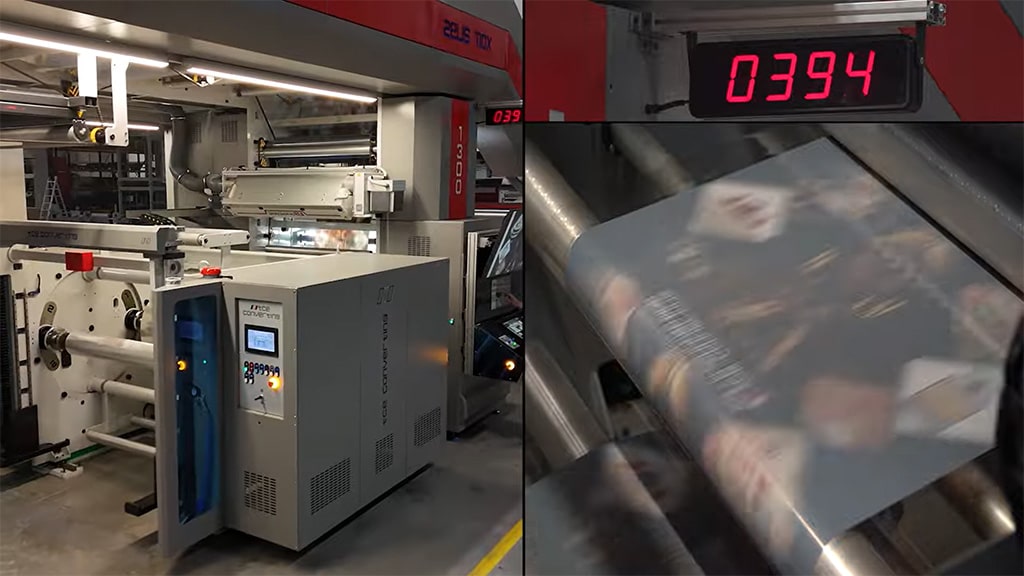
Image Transfer: The inked anilox roller touches the printing plate, transferring ink to the raised image areas. The plate then presses against the substrate (paper, film, or foil) to transfer the image.
Drying & Curing: The wet ink passes through a drying system. Modern presses increasingly use LED-UV curing, which dries ink instantly using ultraviolet light, using less energy than traditional hot air dryers.
Inline Finishing: The printed web moves directly into cutting, laminating, or die-cutting stations—all in a single pass.

Top Flexo Trends for 2026: Hybrid & Automation
Flexography is no longer just "old school" analog printing. To rank in 2026, you must understand how the technology has evolved.
1. Hybrid Printing (The Best of Both Worlds)
The biggest trend in 2026 is the Hybrid Press. These machines combine Flexo stations (for solid colors, varnishes, and whites) with a Digital Inkjet unit (for images and variable text) in one line.
Why it matters: You can print 50,000 identical pouches (Flexo economy) but add a unique QR code to every single one (Digital flexibility).
2. AI & Automated Setup
Historically, setting up a flexo job took hours. New presses feature AI-driven registration and pressure settings, reducing setup time to minutes and cutting waste by up to 50%.
3. LED-UV Curing
Sustainability is driving a shift from solvent-based inks to LED-UV inks. These inks cure instantly, emit zero VOCs (Volatile Organic Compounds), and use significantly less electricity than traditional UV lamps.
Flexo vs. Digital Printing: The "15,000 Unit Rule"
The most common question buyers ask is: "Should I use Flexo or Digital?"
In 2026, the answer comes down to volume and the Break-Even Point.
|
Feature |
Flexographic Printing |
Digital Printing |
|---|---|---|
|
Setup Cost |
High (Requires Plates & Tooling) |
Low (No Plates) |
|
Per-Unit Cost |
Extremely Low (at high volume) |
High (remains flat) |
|
Speed |
1,000 - 2,000 ft/min |
100 - 300 ft/min |
|
Variable Data |
No (Static Images only) |
Yes (Unique codes/names per item) |
|
Quality |
Excellent for solids & Pantone matches |
Superior for photo-realistic detail |
The "15,000 Unit" Break-Even Rule
For most label and packaging jobs, the magic number is roughly 15,000 units.
Under 15,000 units: Digital is usually cheaper because you avoid the cost of making plates ($100-$300 per color).
Over 15,000 units: Flexo becomes significantly cheaper. The high setup cost is diluted over thousands of units, making the per-label price a fraction of digital.
Inks & Substrates: Flexo’s Superpower
The main reason flexo dominates packaging is its versatility. It can print on materials that offset and standard digital presses simply cannot handle.
Substrates (Materials)
Corrugated Board: Direct print onto shipping boxes.
Flexible Films: Plastic pouches for chips, coffee, and frozen food.
Metallic Foils: Chocolate wrappers and premium labels.
Tissue & Napkins: Highly absorbent, thin materials.
Ink Types
Water-Based: Eco-friendly, used primarily for corrugated boxes and paper.
Solvent-Based: The standard for plastic films (creates a strong bond), though requires careful ventilation.
UV / LED-UV: Cures instantly for high-gloss finishes and sharp detail.
Advantages & Disadvantages Summary
Advantages
Speed: The fastest printing method for long runs.
Versatility: Prints on virtually any material (porous or non-porous).
Inline Finishing: Cuts, coats, and laminates in the same pass as printing.
Durability: Inks are generally more durable and weather-resistant than digital toners.
Disadvantages
High Initial Cost: Plates and setup make short runs expensive.
Setup Time: Changing jobs takes longer than digital (though this is improving with automation).
Fine Detail: While "HD Flexo" is amazing, digital still holds a slight edge for ultra-fine gradients and shadows.
FAQ: Common Questions About Flexo
Yes, modern flexo is increasingly green. The shift to water-based and LED-UV inks reduces VOC emissions. Furthermore, new solvent-recycling systems allow printers to reuse cleaning solutions, drastically reducing chemical waste.
Yes. Modern "HD Flexo" uses high-resolution plates (4,000 dpi) to print photo-quality images. However, for short-run art prints or brochures, offset or digital is still preferred.
Flexo uses flexible plates and rotary printing (roll-to-roll), making it ideal for packaging and uneven surfaces. Offset uses metal plates and prints onto flat sheets (or webs), offering slightly higher quality for paper products like books and magazines.
Conclusion
Flexographic printing remains the backbone of the global packaging industry in 2026. While digital printing captures the headlines for short runs, flexo is the workhorse that produces the billions of labels, pouches, and boxes we use every day.
If you are sourcing packaging for a product launch, remember the rule of thumb: start with digital for your pilot run, but switch to flexo once your volume hits 15,000+ units to maximize profitability and speed.
Need a Custom Packaging?
Get a Free Quote Today!